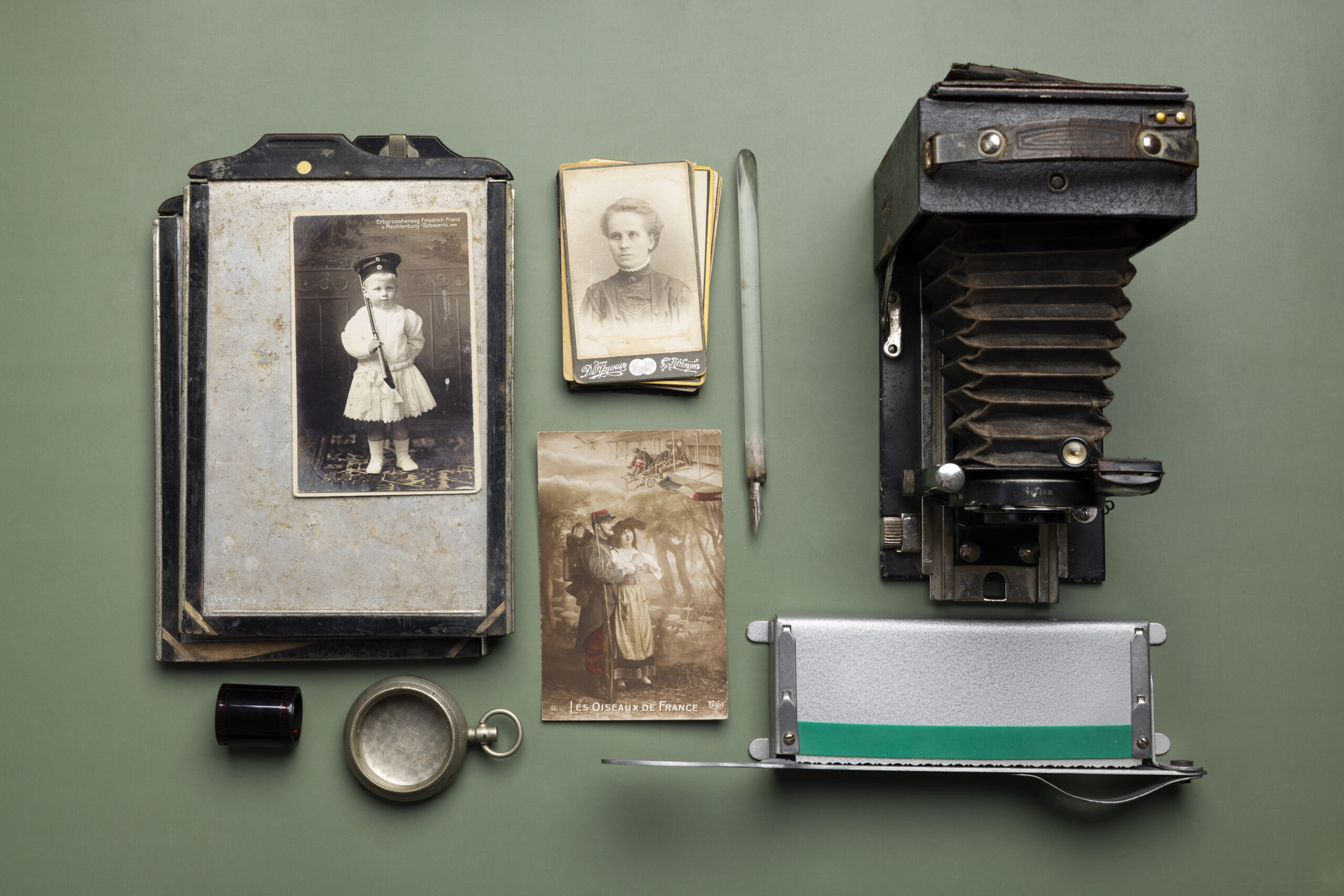
The History of photography traces a shift from projected light to permanent chemical images, film, electronic sensors, and computational processing. No single inventor completed that transformation; Joseph Nicéphore Niépce, Louis Daguerre, William Henry Fox Talbot, George Eastman, and later digital engineers solved different parts of the problem. Across two centuries, cameras became faster, smaller, cheaper, and easier to use. Those changes expanded photography from a specialist experiment into an everyday method for recording and interpreting experience.
From Camera Obscura To The First Permanent Image
The key was a process for using light-sensitive silver salts, which allowed images to be captured and retained, instead of just projected. The ability for a scene to be optically reproduced in inverted fashion through a pinhole or other small opening had been known for a long time. This was the basis of the camera obscura. This basic optical mechanism provided the fundamental design for the camera. The problem was that no material had been discovered that could capture the images and retain them. During early photography, materials were discovered, through trial and error, that could capture and retain images through the use of silver salts. This process allowed for the taking and retaining of photographic images.
Joseph Nicéphore Niépce joined optics and chemistry in his 1826–27 heliograph. He coated a pewter plate with bitumen, placed it inside a camera, and exposed it for hours. One historical guide estimates at least eight hours. The hardened coating preserved an image after the remaining material was removed.
How The Camera Obscura Captured A View
The problem with this idea, though, is that the projected images disappeared if the lighting changed. At this point, there is no way to preserve or otherwise record the projection. The camera obscura was a device which used a pinhole (or a lens) in order to project an image of the outside world (in reverse) onto the surface of a room or box. An artist could simply trace what he saw on the receiving surface. The device could take the form of an entire room which was darkened, or it could be a small enough box to carry around. The camera obscura was useful because it gave accurate representations of outside scenes. However, before photography invented, there was no way to record the image.
The First Photographs And Their Inventors
What was Niépce’s major accomplishment in early photography? Niépce was responsible for “View from the Window at Le Gras” which is considered by many to be the earliest surviving permanent photograph taken using a camera. Niépce’s experiments answered the questions of permanency. His work also lead to further innovations through his collaborator Louis Daguerre, who developed a more practical photography process. What was Louis Daguerre’s major accomplishment in early photography? Where Niépce’s process solved one of the major problems of photography, that of permanency, Daguerre refined it to develop a more practical photographic process that addressed the questions of clarity as well as the difficulty of taking an exposure. history of photography
Daguerreotypes, Calotypes, And Wet Plates
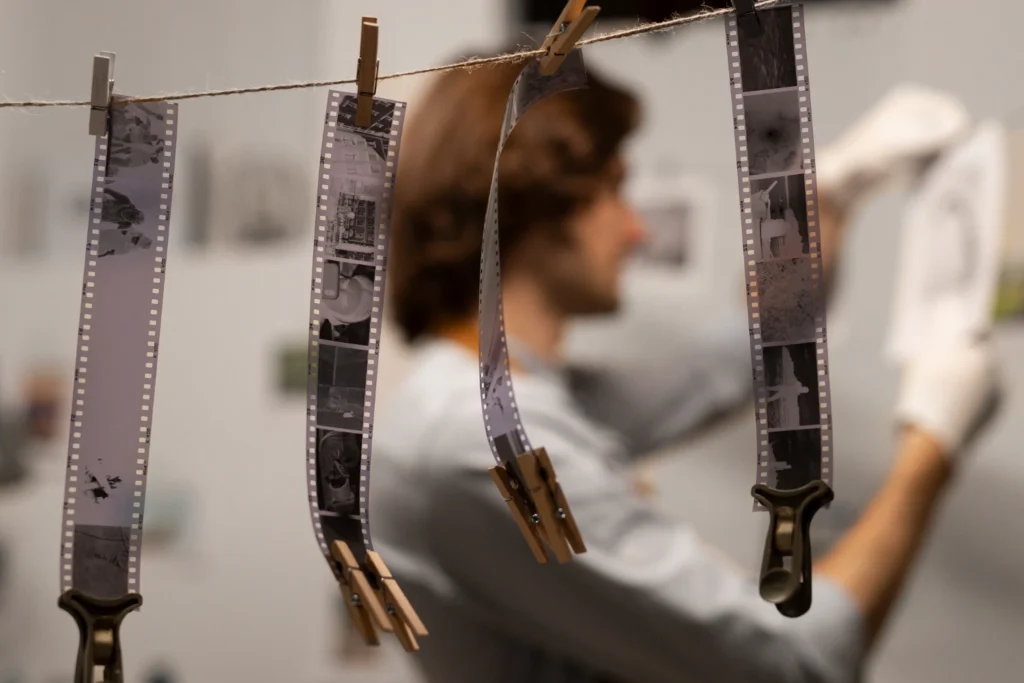
Before and after these images were taken, many rival photographic processes were introduced which each provided varying degrees of success with respect to sharpness, ability to create multiple prints, rapidity of exposure and convenience of usage. It had been a great technological leap for first photographs, resulting in many other competing and evolving photographic processes.
Daguerreotype vs calotype vs wet-plate photography processes
| Photography process | Introduced | Best for | Advantages | Limitations |
|---|---|---|---|---|
| Daguerreotype | 1839; Louis Daguerre | Highly detailed portraits, architecture and still lifes | Unique image on silver-plated copper; exceptionally sharp detail; no paper grain | No negative or duplicates; mirror-like surface; early exposures often 3–15 minutes; toxic mercury fumes |
| Calotype (talbotype) | 1841 patent; William Henry Fox Talbot | Landscapes, travel scenes and making multiple prints | Paper negative enabled many salted-paper prints; lighter equipment than metal plates; exposures often about 1–5 minutes | Paper fibres softened detail; prints could fade; patent licensing limited adoption in Britain |
| Wet-plate collodion negative | 1851; Frederick Scott Archer | Portrait studios, landscapes and documentary work | Glass negative combined fine detail with repeatable albumen prints; exposures often 2–20 seconds | Plate had to be coated, exposed and developed while wet—typically within 10–15 minutes; required a portable darkroom |
| Ambrotype (wet-plate positive) | Patented 1854; James Ambrose Cutting | Affordable one-off portraits | Underexposed collodion image on glass appeared positive against a dark backing; faster and cheaper than many daguerreotypes | Unique image could not produce prints directly; glass was fragile; detail and tonal range were below glass negatives |
| Tintype (ferrotype) | Patented 1856; Hamilton L. Smith | Low-cost portraits at fairs, camps and street studios | Direct positive on lacquered iron; durable, portable and commonly ready within minutes | No negative for copies; laterally reversed image; small plate and limited tonal range reduced fine detail |
This had to be followed almost immediately upon exposure, before the emulsion dried. This made it less of an improvement than the daguerreotype and calotype processes which preceded it. However, they were less expensive and allowed shorter exposure times which made portraits less expensive. Image quality for the Daguerreotype has never been equaled. This was the first process of photography. Introduced a new process for creating pictures. A negative that could be used to produce multiple positives. This allowed for many copies of a particular photograph and also improved picture quality. This was a major advancement in the development of photography and is still in use. This negative could be used to produce multiple images from one exposure.
Photography Then And Now
Portraiture also functioned as a way to present one’s identity, an aspect that can be seen as present-day users utilize selfies with their smartphones. This is because in nineteenth-century photographs, a certain amount of preparation was needed to take a portrait in the photography studio. The sitter needed to keep perfectly still while assuming a posed position; occasionally support was needed to ensure that the sitter’s head would not move. This presentation of identity was carefully curated: painted backdrops and staged lighting were used to portray the sitter in a specific way. This staging, or the idea of portraiture as performance, is seen today in selfie-taking as well. Smartphones provide the same function in the sense that identity is presented and portrayed through selfies. The front-facing camera and automatic functions of the smartphone can act in place of the equipment and operator in the studio.
the potential audience for immediate feedback is the entire internet. Think of a traditional studio portrait being delivered to a single household and now compare that experience with your next mobile phone snapshot going out into cyber space on an instantaneous basis. Nothing will sell what can’t be seen. This principle has not changed in commercials either then or now. The construction of desire still involves the strategic employment of pose, wardrobe, lighting, and framing that include some things and exclude others in order to build a visual argument. The only major difference between now and then is that whereas a studio portrait was made for private consumption, your mobile phone picture will soon have a legion of commenters. The only constant that’s changed in the history of photography: “sex sells” has always been the name of the game.
How Photography Became A Mass Medium
It wasn’t uncommon for families to exchange copies of these photographs with friends and family, creating visual heritages that could be passed down for generations. The process of photography was becoming simpler and less expensive. Equipment could become smaller and more portable, processes were standardized, and the cost per exposure decreased. These advances helped transition photography away from a specialized practice and towards a more mainstream medium. Commercial portrait studios acted as a liaison between the complex technology of the day and the general populace. The process of photography at a commercial studio didn’t require that customers understand the chemistry of the process. These changes allowed families to commission portraits as a record of who they were.
Photographs serve as private memories, commercial products, journalistic evidence, and artistic inspiration. But while they have always been able to perform these roles, the rise of portable cameras allowed photography as a whole to become a more popular and culturally dynamic medium. The portable camera allowed the individual who owned the camera, not the studio operator, to gain control over the production of images. Not only did the range of technically convenient subjects widen, the relationship between photography and everyday life changed. Photography became as much a part of leisure and family events, travel and the common street scene as it was of the formal sitting. As cameras became embedded into daily life, so did photographs.
Film, 35Mm, Color, And Instant Cameras
The Polaroid camera brought the idea of image immediacy. A Polaroid photo is in your hands seconds after you snapped the shot. Key moments in the evolution of the still camera and the technologies that made images possible are shown in this table: George Eastman invented the film strip. The Kodak camera, introduced in 1888, made it much easier to take an exposure. It also made the taking and processing of photos separate processes. Leica made the compact 35mm format practical for the still camera, and it became widely adopted, fostering a culture of mobile photography. Kodachrome introduced a color film format that was widely adopted. From the 19th century to the present, the development of new photographic technologies has narrowed the gap between the time we see something and can possess an image of it.
Documentary, Street, And News Photography
As camera equipment became smaller and more practical, new photographic movements emerged. This enabled photographers to record events happening in real life as they were occurring, producing documentary photography exploring the social situations and conditions under which people were living. Spontaneous moments on the street were the focus of these photographs. By photographing people, photographers were also exploring ideas of gesture and movement, and structuring these to make images telling a story or narrative. This made photography a strong means of disseminating current events in a timely manner and relating these to large groups of people through photojournalism. The New Topographics was a photographic movement that presented an alternative approach to photographing landscapes that had often been depicted with an idealized sense of beauty. In this movement, photographers instead took a more controlled and less emotive approach to landscape photography, and photographed places and subjects that were man-made rather than natural. Roads, factories and man-altered landscapes were key subjects of this movement, and they challenged perceptions on landscape as well as photography itself.
Two Classics Of Postwar Photography
In Germany, McBride used intimate, human scale and candidness to record shifting attitudes and perceptions in a changing society. The two photographers approach photography very differently, yet each is an essential part of the spectrum of postwar photography in Europe. Whereas Heinrich Heidersberger’s photos document his interest in technical processes of photography and abstraction through manipulation of light and exposure to create images that go beyond what a human can actually see, Will McBride’s candid and intimate photos of people bring us directly to the subject of his interests.
Photography, as a medium, has always offered two basic possibilities that remain true today: It can be used as an instrument for the construction of an image, relying on planned movement and the use of an apparatus; or it can be used as an instrument of reaction, relying on a human subject and the photographer’s response to it in front of the camera. In postwar photography, Heidersberger and McBride represented these contradictory possibilities. They worked in a completely different manner, yet their work was united by a concept that the camera was not an objective, recording tool but one that could be used for interpretation.
Heinrich Heidersberger’s “Dress Of Light”
Dress of Light is a depiction of a process of creation, the photograph being the result of the artist’s work rather than a representation of a scene that can be described and reproduced outside of the medium of photography.
In the case of Heinrich Heidersberger’s Dress of Light the process of creation is not an easy one to describe, but in a general sense it can be summed up as a study of abstract structure created by light in motion. Using a long exposure Heidersberger recorded a kinetic light apparatus that he had designed and built in his studio.
In Dress of Light the camera was not used to freeze a moment that was visible, but rather to gather successive moments of light and motion and bring them together in a single photograph. The result of using long exposure is a record of an abstracted time, or rather the imposition of structure and form onto a mechanical movement.
Will McBride’s Documentary Eye
Will McBride’s photographic images of postwar Germany were characterized by a sense of humanism that expressed the tangible presence of the people and places he photographed as well as an emotional ambiguity. In particular McBride showed an affinity for youth culture. He was sensitive to the changes taking place in young people’s lives, in the nature of personal relationships, in more informal behavior, and in the rebelliousness of a generation determined not to accept an inflexible system of rules. McBride’s photographs are distinctive for their sense of physical immediacy. He sought the closest possible physical relationship with his subjects, rather than the more objective distance of the observer. This emphasis on personal experience and contact is also expressed in his reportage, which focused on the lives of individuals, rather than offering more general cultural commentaries. McBride’s personal observations of youth culture, then, were one way to document social change.
The Road From Film To Digital Cameras
In photography, this means that the film has a special chemical coating that will change in response to light. The digital camera uses similar technology, but eliminates the chemical process. The image is captured on an electronic sensor which then converts the light to electrical signals and records them in digital format. The charge coupled device (CCD) was a breakthrough innovation because of the ability to record the image as a two-dimensional array of pixels. Digital Camera Photography: Definition The film has a coating which is altered by light when the film is exposed. Digital cameras replaced the film with an image sensor which turns light to signals. A processor saves this information as an image.
Kodak built a digital camera prototype in 1975, demonstrating electronic capture long before consumer models became common. Early systems faced limits in resolution, storage, processing speed, and display. As those components improved, consumer digital cameras removed film costs and offered immediate review. Users could erase failed frames, adjust settings, and transfer files without chemical development.
Photography In The Mid-20Th Century
Before digital imaging, 35 mm film was by far the most common format in small-format photography, both for amateurs and for professionals engaged in photo reportage. This was the norm for the images which were then most frequently shared, those that appeared in mass media and in print, as well as in photo books. The development of better color film stocks helped to extend the use of film into many fields of both consumer and commercial use. The rise in popularity of single-lens reflex cameras meant that it became commonplace to view through the lens with which one was taking pictures. Photo magazines relied heavily on sequences of images, and the medium began to be regarded as a form of storytelling for photographers. These and many other characteristics of a sophisticated, fully-developed film photography environment determined many of the operational and visual conventions that we have since inherited in the practice of digital photography.
Digitalization And Image Editing
Photoshop (Adobe Photoshop) and other image manipulation programs have combined classic darkroom techniques with an array of new compositing and other effects to create a rich set of tools in the world of digital photography. Images can be adjusted to change their color, texture, contrast, content, and framing, and these techniques have become an integral part of photography, whether for fine-art pieces or everyday shots. Image manipulation is not a new concept, of course, but digital photography and image data have made it easier and more widespread. The advent of digital file formats has opened up the possibility of changing an image without being restricted to the original; while this is not possible with images captured with traditional methods, programs such as Photoshop have made it possible to perform complex and time-consuming alterations more easily-and, crucially, more easily undo them!
Captions, algorithms, and data compression all shape how viewers experience images posted online. Even viewer responses shape the image’s character. A photograph becomes a communicative act the moment it is shared. This process of sharing is also streamlined by the networked smartphone. It is a technological artifact that merges five previously distinct features, from the original moment of exposure through distribution, into a single object. These five features can be described as shooting a photo, enhancing a photo, editing a photo, storing a photo, and sending a photo. The second of these five features is already done on a smartphone before the picture even appears in front of you. The final image can actually be a combination of multiple exposures and is enhanced by a sophisticated software program that analyzes the photograph, then removes some of the grain, increases the clarity, and adjusts the colors.
The Story In Brief
The History of photography follows three linked problems: forming an image, preserving it, and distributing it. Optical projection began with the camera obscura. Chemical processes then made projected views permanent, while negatives and later film allowed photographs to be copied, transported, and produced at increasing speed.
In photography, the fact of the view forming as light enters a device has remained the constant, but the methods of recording that have changed drastically in the last couple decades. The first change came as photography became digitized and sensors were used to record data rather than an exposure. Then came the change from simply recording data to using software to process images. Today we see computational imaging where a photo is the result of both the exposure as well as software processing in the modern camera or mobile phone. As we advance technologically, the process of photography will continue to change in ways of recording, processing, sharing and duplicating images. But it remains in many ways the same as before, in that the photograph is capturing an image with light.
History Of Photography In A Short Timeline
There are several dates in the history of photography that are very significant, as they represent a change both in the method used to capture images, as well as in how they are copied and how they are distributed. The history of photography can be divided into several major turning points.
- 1826–27: Joseph Nicéphore Niépce creates “View from the Window at Le Gras,” the earliest surviving permanent camera image.
- 1839: The daguerreotype process is publicly announced, bringing highly detailed photographic images to wider attention.
- 1841: William Henry Fox Talbot introduces the calotype, using a paper negative to produce multiple positive prints.
- 1851: The wet plate collodion process combines fine detail with shorter exposures than many earlier methods.
- 1888: George Eastman introduces the Kodak camera, simplifying picture-taking for customers who do not process plates.
- 1889: Flexible roll film advances camera portability and supports a more convenient sequence of exposures.
- 1920s: Leica popularizes compact still cameras built around the 35mm film format.
- 1930s: Kodachrome helps establish practical color photography for slides, publishing, and personal use.
- 1940s: Polaroid introduces instant photography, reducing the wait between exposure and finished print.
- 1975: Kodak constructs an early digital camera prototype that records an image electronically.
- 1990s: Adobe Photoshop and consumer digital cameras expand software-based editing and film-free capture.
- 2000s: Smartphones combine cameras, computational processing, internet access, and immediate image sharing.
Key takeaways
The history of photography The history of photography spans the development from early optical devices such as the camera obscura and the lens to modern digital cameras capable of capturing millions of pixels. In 1826 and 1827 Ni3pce made the first permanent photograph with a camera, and since then several different processes have built on his pioneering work. The daguerreotype, calotype, and other early photographic processes each had unique traits and advantages, improving image quality, allowing for more artistic interpretation, or decreasing the expense and complexity of producing photographs. Eventually the relative ease and low cost of making photographs with roll film led to photography becoming a popular pastime, with 35mm film making portable cameras possible for everyday use. The introduction of color film, disposable cameras, and instant cameras broadened the appeal of photography further. Today, most people use digital cameras, based on an array of image sensors that directly create digital images, which are commonly used alongside software for photo editing and other image manipulation. The low cost and easy availability of digital image storage has led to a proliferation of digital photographs, with advanced cameras now built into mobile phones, allowing images to be instantly shared across the Internet.
Frequently asked questions
Who was the first to invent photography?
Although many people made important contributions to the development of photography over a period of time, Joseph Nicéphore Niépce is often considered its inventor because he created the earliest surviving permanent photograph made in a camera in 1826–27. Other key innovators include Louis Daguerre, who developed the daguerreotype process, the first practical photographic process, and William Henry Fox Talbot, who invented the negative-positive process, in which multiple prints can be made in a darkroom from a single negative. Over time, many inventors contributed to the development of photography, each resolving one challenge or another related to optics or chemistry.
What are the 7 basics of photography?
In photography there are 7 practical basics which you will come back to time and time again, these are: exposure, aperture, shutter speed, ISO sensitivity, focus, composition and light. Focus, composition and lighting all influence how the viewer interacts with your image, where they look, and what your photo is telling them about that particular scene. Aperture controls how much light enters the camera, as well as the depth of field. Shutter speed controls how movement is depicted in an image. ISO sensitivity is a digital setting which alters the sensor’s sensitivity to light. Aperture, Shutter speed and ISO are all part of exposure, and the exposure of an image is directly affected by the settings chosen.
Who took the first photograph ever in history?
Who Invented The Photo?
Although Daguerre and Talbot pioneered the more practical versions of photography, Joseph Nicéphore Niépce took the earliest known permanent photograph made in a camera. Niépce’s photograph, made in 1826-27, is titled View from the Window at Le Gras. Joseph Nicéphore Niépce’s “View from the Window at Le Gras” (1826-27) is the earliest known surviving permanent photograph from a camera. In this photograph, which required an exposure time of several hours, Niépce used a light-sensitive coating of bitumen on a pewter plate. Though many people and technological advances have contributed to the invention of photography, Joseph Nicéphore Niépce’s photograph is the strongest answer to the question of who invented it.
Did photography exist in the 1700s?
Are there any photographs from the 1700s? What are some facts about the history of photography? When were cameras invented? when were photographs invented Are there any photographs that were taken in the 1700s? Are there any known photographs from the 1700s? When was the first picture taken with a camera? When was photography invented? No known permanent photographs were taken in the 1700s. The standard answer to when photographs were invented is 1826 and 1827, when Niépce successfully fixed an image. However, all of the basic pieces of photography, necessary optical devices and the discovery of light-sensitive chemicals, had been developed in the 1700s. Thus, this century did not produce permanent results but it was a necessary step toward the new photographic medium.
How did Kodak make photography accessible to the public?
What was special about the Kodak? In 1888, Kodak introduced a new type of camera that was much easier to use. It reduced the amount of technical knowledge and skill that owners needed to have in order to take photos. For the first time, photography was not just about taking photos; it was also about developing film and making prints. This was the complicated part that Kodak took off your hands. Instead of managing a complicated process, customers could leave those tasks to Kodak. Roll film allowed people to take many photos on one roll. It eliminated the need to manage individual glass plates.
Photography’s Continuing Transformation
History of photography tells the story of photography as a process of continual transformation with the driving goal to make the processes of capturing and sharing our visual world ever more practical and accessible. Below, you’ll learn about photography’s earliest roots and milestones, from the first photographic processes to the introduction of digital cameras. Photography’s Continuing Transformation Photography owes its existence to a number of technical breakthroughs. Here are a few key steps in the history of photography.
- The camera obscura, literally a darkened room with a hole in one side through which an inverted image of the outside world could be projected onto the opposite side, provided the optical basis for photography.
- Niépce created the earliest surviving permanent photograph.
- Daguerre and Talbot developed photographic processes that were practical for everyday use and (in the case of Talbot’s system) could be reproduced.
However, the introduction of 35 mm cameras, color film, instant prints, as well as the influence of documentary, street and news photographers has opened the field to a larger group of people. The advent of the digital camera has reduced even further the technical barriers to the practice of the art. Questions of manipulation have arisen in the use of programs such as Adobe Photoshop, as well as about the nature of the photograph and the photographer in a society where much photography is automated. However, specific cameras, techniques, the capabilities of programs and the practices of websites and apps are constantly changing; one should double check this information when undertaking a comparison between technical components. The objective of photography, then, from its inception until its place in our contemporary society is consistent: Photography seeks to record and interpret the visual world around us and shape our understanding of the world through that depiction in unique and transformative ways.